- Blog
- Redevelopment
- Mumbai
Redevelopment Becomes the Entry for Non-Mumbai Developers in Mumbai Real Estate Market - A Report by Ghar.tv
 Admin
Admin
- 2026-01-02
- 1324
- 0
Never miss any update
Join our WhatsApp Channel
The Mumbai real estate market is witnessing a strategic realignment. In 2025 and continuing into 2026, redevelopment has emerged as the definitive route for non-Mumbai developers to enter and expand in the country's most competitive and land-starved real estate zone.
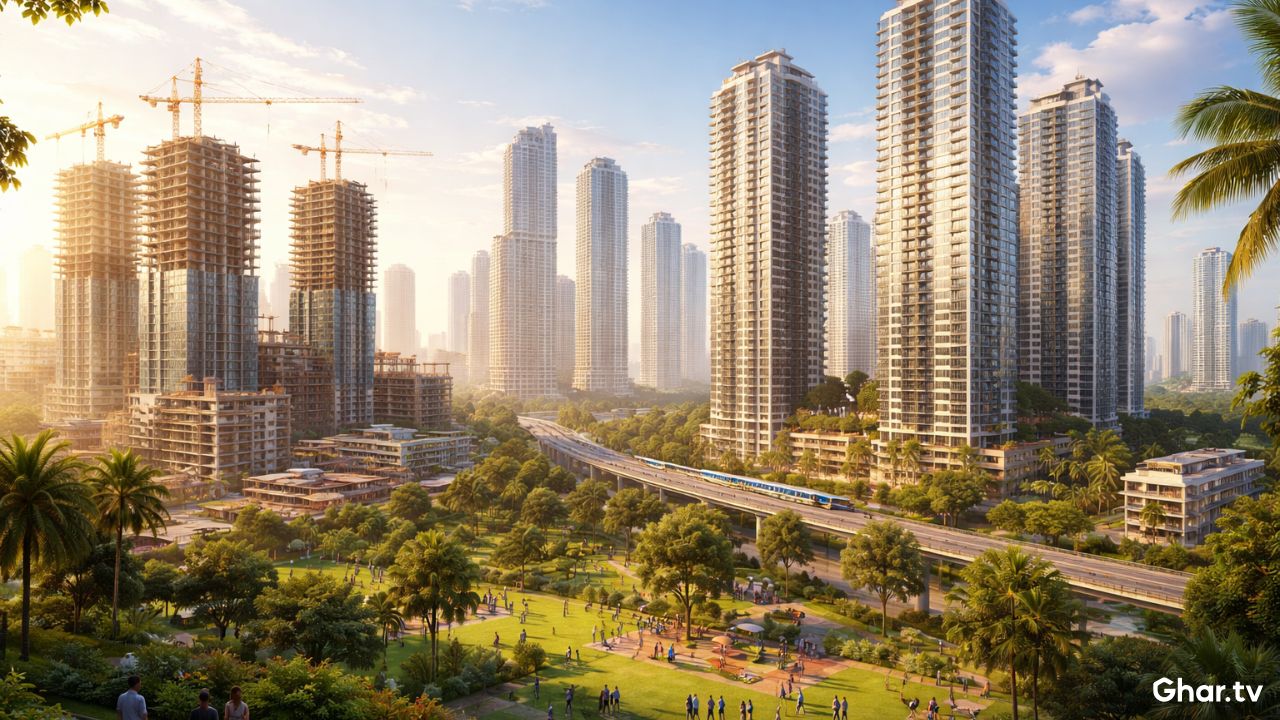
What was once a domain guarded by local players is now being accessed by national brands through society redevelopments, slum rehabilitation, and strategic joint ventures. This transformation is not only redefining the city's skyline, but also the way developers and investors view Mumbai's property landscape.
1. Entry via Redevelopment – A 2025–26 Reality
Mumbai's high land prices, complex regulations, and limited availability of open plots have made greenfield development nearly impossible for new entrants. Redevelopment—through collaboration with cooperative housing societies, existing landowners, or local builders—has become the go-to access strategy.
Key Developer Movements in 2025–26
| Developer | Base City | Mode of Entry | Mumbai Location | Status |
|---|---|---|---|---|
| DLF | Delhi NCR | JV with Trident Realty | Andheri West (416 units) | Active |
| Prestige Group | Bengaluru | Direct Redevelopment | Mira Road, Mulund | Ongoing |
| Sobha Ltd | Bengaluru | Market Entry Project | Eastern Waterfront | Launched |
| Puravankara | Bengaluru | Redevelopment Deal | South Mumbai | Confirmed |
| Ramky Estates | Hyderabad | Slum Redevelopment | Chembur | Entry underway |
| Manglam Group | Jaipur | Society Redevelopment | Borivali | Operational |
| Chennai Developer | Chennai | Slated Redevelopment | MMR (pre-launch stage) | 2026 entry planned |
2. Why Redevelopment Has Become the Entry Point
Redevelopment now offers unmatched advantages to developers eyeing Mumbai:
- No major land purchase required – reduces capital burden
- Access to established neighbourhoods – where demand and pricing are strong
- Faster project turnaround – thanks to pre-existing society structures and demand
- Better margins – due to higher FSI utilisation and lower land outflow
- Partnership leverage – local builders de-risk regulatory and operational aspects
It's not just about access—it's about strategic positioning in Mumbai's most resilient and lucrative micro-markets.
3. The Scale of Redevelopment in Mumbai
| Indicator | Estimated Volume (By 2030) |
|---|---|
| New Homes via Redevelopment | ~44,277 units |
| Total Redevelopment Market Value | ₹1.3 lakh crore |
| Societies engaged post-2020 | Over 900 |
| Land Area Unlocked | ~327 acres |
| Major Active Zones | Borivali, Bandra, Chembur, Andheri, Ghatkopar |
The entire redevelopment ecosystem—from mid-income societies to MHADA clusters and slum zones—offers enormous entry potential for national players looking to build a Mumbai presence without traditional land acquisition.
4. 2026 Outlook – New Wave of Developer Entries
The momentum from 2025 is expected to accelerate through 2026 as more developers from cities like Pune, Ahmedabad, and Chennai tap into Mumbai's redevelopment engine.
Expected 2026 Trends:
- Rise in JV Projects between local and outstation developers
- More mid-to-premium offerings with upgraded lifestyle features
- Expansion into eastern suburbs beyond traditional west-dominant growth
- Shorter sales cycles due to demand in city-core redeveloped stock
With more than 7,000–9,000 units expected to launch annually via redevelopment, 2026 will see Mumbai's supply dominated by renewed urban infill rather than fringe expansion.
5. Impact on Stakeholders
Developers
- Redevelopment offers the fastest route to enter a high-ticket market
- Joint ventures lower legal and social complexities
Investors
- Redeveloped homes in high-demand micro-markets offer strong returns
- Brand entry by national players brings transparency and accountability
Homebuyers
- Get access to modern homes in familiar neighbourhoods
- Greater project completion confidence due to reputed developers joining the fray
6. Where It's Happening – Redevelopment Hotspots
| Location | Activity Type |
|---|---|
| Borivali | Largest society pipeline, multiple new launches |
| Andheri | JV-based redevelopment, branded entry focus |
| Ghatkopar | Old society transformation, infrastructure-linked growth |
| Chembur | Slum rehabilitation, mid-income housing |
| Eastern Waterfront | Premium first-time developer entry zone |
These micro-markets are expected to drive both supply and price movements in 2026, redefining buyer focus across the city.
Conclusion
Redevelopment has become the standard entry model for non-Mumbai developers eyeing India's most valuable housing market. With over ₹1.3 lakh crore in market value and thousands of homes to be built by 2030, the trend is not only altering Mumbai's skyline but also changing the competitive dynamics of who gets to build in this city.
As 2026 unfolds, more national developers are expected to join the fray, forging alliances, securing society deals, and contributing to the next wave of Mumbai's urban evolution.
For developers, investors, and homebuyers alike—Mumbai redevelopment is no longer an alternative. It's the future.


Comments
No comments yet.
Add Your Comment
Thank you, for commenting !!
Your comment is under moderation...
Keep reading blogs