Noida Waste Management System targets residential compliance
 Namrata Parab
- 2026-04-02 13:06:17
- 1214
- 0
Never miss any update
Join our WhatsApp Channel
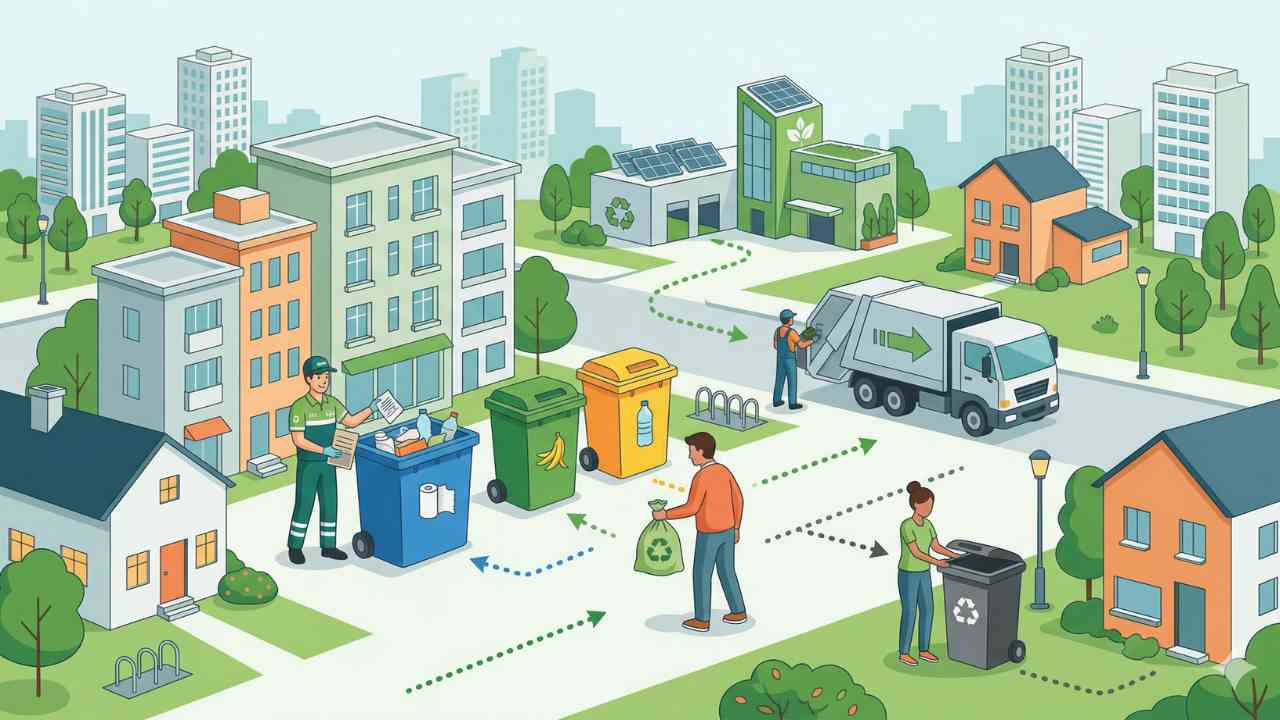
Noida: The Arun Vihar Residents Welfare Association is launching a comprehensive four-bin waste management protocol to streamline sanitation efforts across 5,000 local households. This strategic initiative targets improved source-level segregation for a population exceeding 25,000 residents residing within the prime residential sectors of 28, 29, and 37.
Noida Waste Management Project Specifications
The Arun Vihar Residents Welfare Association is operationalizing a new systemic framework to enhance urban cleanliness and waste processing efficiency.
| Metric | Details |
|---|---|
| Primary Location | Noida Sectors 28, 29, 37 |
| Targeted Households | 5,000 units |
| Estimated Population | 25,000 residents |
| Waste Categories | 4 (Wet, Dry, Sanitary, Hazardous) |
| Proposed Infrastructure | 26 composting units |
| Execution Phase | April 2026 |
Implementing Advanced Residential Waste Protocols
The transition to a four-bin system requires residents to separate organic, recyclable, clinical, and toxic materials at the point of origin. This procedural change seeks to resolve ongoing challenges where commingled materials previously hindered effective landfill management and processing at the facility level. Noida real estate demand increasingly prioritizes sustainable infrastructure, and this rollout aligns with broader environmental benchmarks for established housing colonies.
The association has initiated extensive training workshops targeting domestic support staff and residents to ensure compliance with the new segregation mandates. By decentralizing organic waste treatment, the management aims to minimize the environmental footprint of these residential sectors through localized composting. The top greenest residential projects in India often utilize similar decentralized waste management systems to enhance community living standards.
Market Context and Environmental Impact
The integration of professionalized waste handling reflects a growing trend among managed residential hubs in the National Capital Region. Larger townships are moving away from centralized dumping dependencies, favoring localized solutions that reduce haulage costs and improve sanitary outcomes for community members. This shift is critical as urban density rises, placing increased pressure on municipal services to maintain hygiene standards. Many developers are now focusing on gated communities with organic farms to promote sustainable living practices.
Operational Implications for Residents
Enforcement of the new system will involve rigorous monitoring and potential financial penalties for failure to follow segregation guidelines. Residents are expected to adopt these habits immediately, as the association transitions from an advisory phase to a mandatory enforcement structure. The 26 planned composting units represent a significant investment in ward-level self-sufficiency, reducing the volume of waste transported to regional landfill sites. Such initiatives are becoming essential for maintaining the value of Noida Extension residential properties as the region continues to expand.
Future Outlook for Housing Societies
Looking toward the remainder of FY 2026, the success of this model will likely serve as a benchmark for other sectors across Noida and the broader NCR region. As housing associations gain greater autonomy in governing internal operations, adopting circular economy practices is becoming a hallmark of well-managed, high-value residential complexes. Successful implementation here will confirm the viability of scalable, resident-led sanitation models in high-density urban zones. Investors often analyze the financial transformation of real estate to understand how operational efficiencies contribute to long-term asset growth. Furthermore, the Noida redevelopment model for housing continues to influence how older sectors modernize their infrastructure to meet current urban standards.
Conclusion
The Arun Vihar Residents Welfare Association remains committed to operational excellence by institutionalizing a rigorous Noida waste management framework. This proactive transition toward decentralized processing serves as a definitive indicator of the evolving standards expected within modern residential communities across the city.
Disclaimer: This article is based on publicly available information and media reports. Ghar.tv does not independently verify all facts and figures mentioned. Readers are advised to conduct their own due diligence before making any investment or business decisions based on this information. The content is for informational purposes only and should not be construed as financial, legal, or professional advice.


Comments
No comments yet.
Add Your Comment
Thank you, for commenting !!
Your comment is under moderation...
Keep reading blogs