Amaravati Capital Resolution Secures Legislative Security for Andhra Pradesh
 Robin Gangawane
- 2026-03-27 18:06:29
- 1261
- 0
Never miss any update
Join our WhatsApp Channel
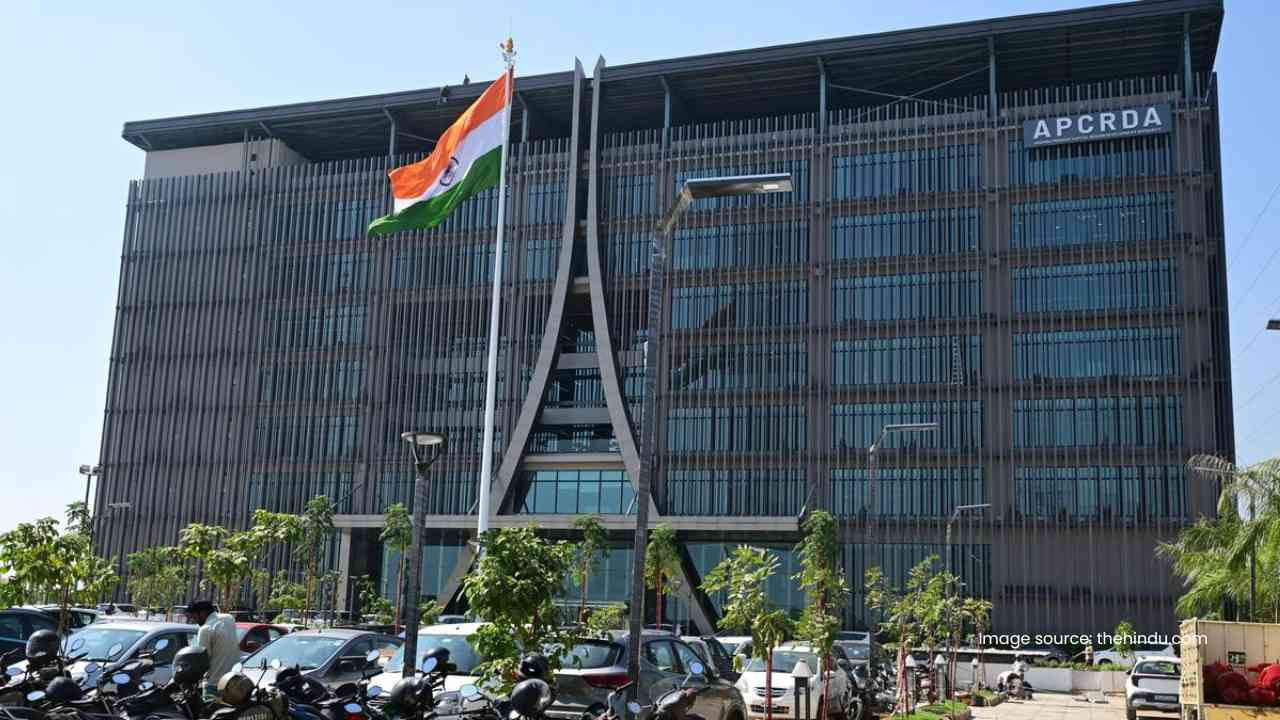
Vijayawada: The Andhra Pradesh cabinet has formally endorsed a draft legislative resolution aimed at permanently enshrining Amaravati as the sole capital city of Andhra Pradesh. This crucial political maneuver seeks to legally insulate the designated urban centre from future policy reversals triggered by subsequent governmental transitions. The focus keyphrase, Amaravati capital resolution, is central to ensuring long-term predictability for investors in the state’s core urban areas.
Legislative Security for Amaravati Real Estate Development
The administration is preparing to introduce this resolution during a special assembly session scheduled for Saturday. The core objective involves petitioning the central government to revise the Andhra Pradesh State Reorganisation Act of 2014. This amendment targets Section 5(2) of the Act explicitly, replacing ambiguous language with a definitive declaration establishing Amaravati as the mandated seat of governance.
The resolution further specifies that the definition of Amaravati will be codified within the appended explanation. This definition aligns precisely with the geographical boundaries notified under the Andhra Pradesh Capital Region Development Authority Act from 2014. This move underscores a systemic effort to create an unassailable legal framework for the capital’s status. Developers looking at similar legislative frameworks might find insights in urban land allotment policy.
| Key Legislative Action | Detail / Rationale |
|---|---|
| Resolution Target | Amend Section 5(2) of AP State Reorganisation Act |
| Legal Objective | Establish Amaravati as the only capital city |
| Defining Amaravati | Area notified under APCRDA Act, 2014 |
| Government Rationale | Prevent capital relocation upon regime change |
| Previous Action | Cabinet passed a similar resolution request in 2025 |
| Judicial Approval | Proposal for 96 new courts approved |
| Infrastructure Funding | ₹606 crore approved for HNSS works Phase I & II |
Judicial and Infrastructure Commitments Unlocked
The state cabinet’s agenda extended beyond capital designation to approve significant administrative and infrastructural outlays. Approvals were granted for establishing 96 new judicial courts across various designations within the state structure. This decision mandates the creation of 1,730 new personnel posts across different judicial cadres to support the expanded framework.
Furthermore, substantial financial allocations were ratified for ongoing water resource projects. The cabinet provided administrative clearance for revised estimates totaling ₹606 crore concerning the Nagarjuna Sagar Right Bank Canal (NSBRC) Schemes (HNSS). The administration also sanctioned ₹44 crore for the ongoing operations and maintenance of lift irrigation schemes located in the Kurnool district.
The cabinet ratified the enhancement of floor prices for land required for the Polavaram project-affected regions. This necessitates an additional financial commitment estimated at ₹565.06 crore to compensate landowners adequately. The state has taken steps to secure its existing development pipeline, highlighting premium residential investment stability across the region. For context on regional growth, review Hyderabad suburban surge.
Market Context: Stability and Political Clarity
Political clarity regarding the capital city is a significant market indicator for large-scale institutional investment in Andhra Pradesh. Speculation surrounding the capital location has historically introduced volatility into land valuations around Vijayawada and the designated capital region. The government's proactive stance, following legal consultation and prior communication with New Delhi, attempts to mitigate this historical uncertainty.
Another immediate fiscal measure endorsed was a one-time waiver on property tax arrears for the 2025-2026 fiscal year within all municipal corporations and municipalities. This move aims to clear outstanding municipal dues and improve the immediate liquidity of local governance bodies. The state also gave the go-ahead for SRM University to construct academic facilities up to 60 metres in height, contingent upon strict fire safety compliance. Developers often seek guidance on navigating complex municipal regulations, such as legal framework for residential compliance.
Implications for Regional Real Estate Demand
Confirming Amaravati ensures that long-term planning by developers, especially those focused on high-value townships, can proceed with greater confidence. Institutional interest in acquiring large parcels of land for commercial or high-end residential development often stalls without firm legal guarantees on urban planning authority. The comprehensive definition of the capital area simplifies future land use approvals under the APCRDA framework. Investors interested in understanding broader market dynamics should examine soaring residential property prices.
The cabinet also addressed specific community economic interests, approving preferential quarry lease allotment guidelines for Vaddera societies. This was coupled with a fifty percent concession on both premium and seigniorage fees for these entities, fulfilling a prior electoral promise. The administration is clearly attempting to balance infrastructural progression with localized socio-economic outreach. For insight into how infrastructure impacts other markets, see reports on Delhi's outer real estate markets.
Outlook on Governance and Future Projects
The administration is preparing for the possibility of inter-state water dispute cases, ratifying the appointment of advocates for these critical legal challenges. This demonstrates forward planning across multiple governmental verticals beyond immediate urban planning concerns. The legal reinforcement of Amaravati’s status should accelerate major infrastructure growth by securing necessary approvals. Understanding the financial mechanisms behind large-scale urban projects is key, like the Centre's infrastructure infusion.
By the close of the current fiscal year, the market anticipates a tangible uptick in investment registrations within the Amaravati region, provided the central government expeditiously processes the amendment request. The judiciary’s expansion, including the creation of 1,730 new positions, also points toward bolstering governance capacity regionally. The administrative approvals provide clear budgetary sanction for key projects. Developers in other regions are also seeing major capital inflows, such as the Puravankara project initiation.
Conclusion
The decisive move by the Andhra Pradesh cabinet to legislate Amaravati’s status via a constitutional amendment request solidifies its position as the state's administrative core. This legislative certainty removes a significant overhang that had previously dampened enthusiasm for long-term real estate speculation and development. The focus keyphrase, Amaravati capital resolution, now represents a pivotal turning point toward greater market predictability in Andhra Pradesh.
Disclaimer: This article is based on publicly available information and media reports. Ghar.tv does not independently verify all facts and figures mentioned. Readers are advised to conduct their own due diligence before making any investment or business decisions based on this information. The content is for informational purposes only and should not be construed as financial, legal, or professional advice.


Comments
No comments yet.
Add Your Comment
Thank you, for commenting !!
Your comment is under moderation...
Keep reading blogs