
Why Mixed-Use Development Could Solve Mumbai's Urban Crisis and Reshape City Living
 Admin
Admin
- 11th Dec 2025
- 1138
- 0
Never miss any update
Join our WhatsApp Channel
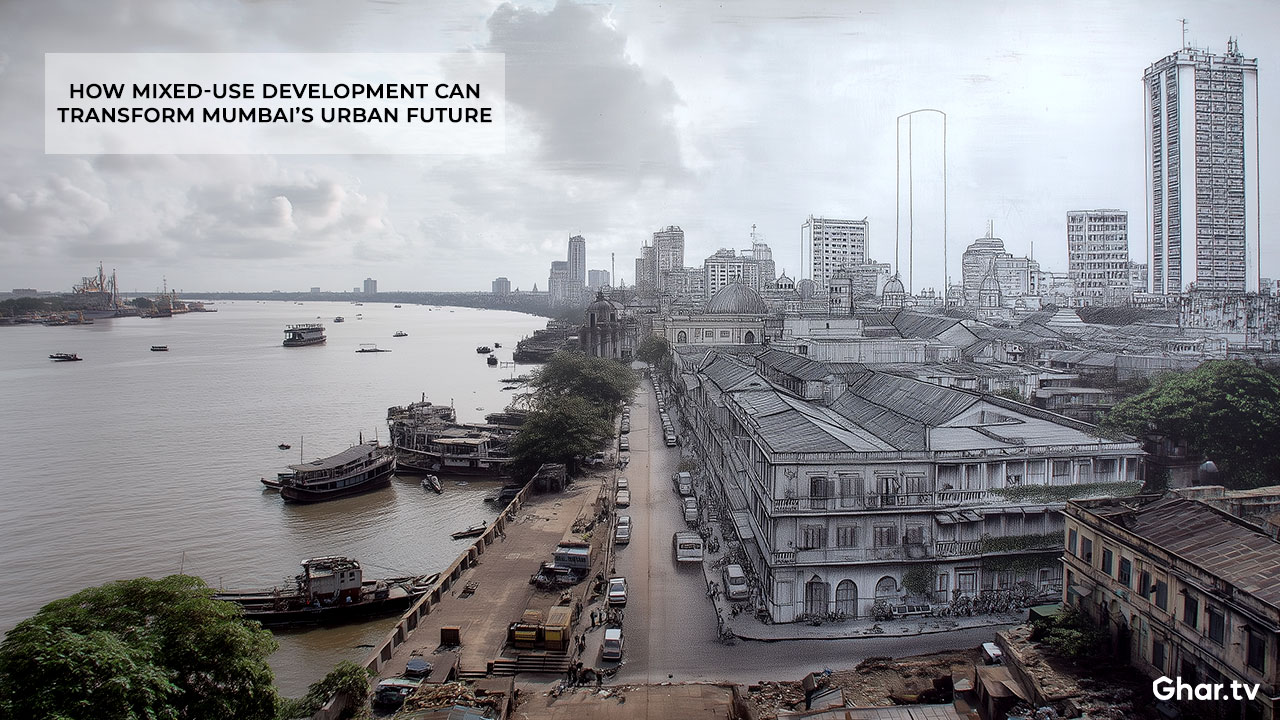
Mumbai, December 7, 2025 — As the financial capital of India continues to wrestle with escalating traffic congestion, extreme population density, and overstretched infrastructure, mixed-use development is reportedly emerging as a viable and transformative solution for urban planning. Industry experts have suggested that this integrated development model could significantly enhance the city's liveability while supporting sustainable long-term growth.
Mumbai Faces Growing Urban Pressure
According to the Global Liveability Index 2025 released by the Economist Intelligence Unit (EIU), Mumbai has been ranked 121st among 173 cities worldwide. The ranking reportedly highlights the mounting pressure on the city's infrastructure and the declining quality of life for its residents. Additionally, data from the TomTom Traffic Index indicates that Mumbai has climbed to the 39th position among the world's most congested cities, up from 52nd in 2023. Reports suggest that commuters travelling just 10 kilometres within city limits now spend an average of 29 minutes on the road, reflecting severe urban mobility challenges.
Experts have noted that population densities exceeding 25,000 people per square kilometre make outward expansion both costly and unsustainable. This situation has reportedly amplified the need for smarter land use strategies. The ongoing infrastructure transformation in Mumbai is expected to play a crucial role in addressing these challenges.
How Mixed-Use and Transit-Oriented Development Offer Hope
Vimal Nadar, National Director and Head of Research at Colliers India, stated that by integrating residential, commercial, retail, and recreational spaces within a single development, mixed-use projects promote vertical growth and optimise land utilisation. He explained that such developments create vibrant, self-sustained communities where residents can live, work, shop, and socialise within walkable distances.
Complementing this approach is transit-oriented development (TOD), a planning model that clusters housing, offices, and public amenities within 500 to 1,000 metres of major transit stations. This strategy reportedly encourages walking and public transport usage while easing congestion and reducing dependence on lengthy commutes. The Mumbai Metro Line 3 expansion is expected to boost property values and connectivity across key urban corridors.
Long-Term Benefits for Cities and Citizens
Beyond addressing congestion, mixed-use development is reported to offer far-reaching socio-economic advantages. Shorter commutes and improved access to essential services are expected to enhance daily life quality for residents. The clustering of retail outlets and office spaces is anticipated to generate employment opportunities and stimulate local economies. Social infrastructure such as schools and healthcare facilities often develops organically around such integrated neighbourhoods.
Nadar further added that well-planned townships support resilient, self-sufficient communities. He noted that these areas become attractive not only to residents but also to investors and businesses, making them powerful engines of inclusive growth. The investment potential of township projects has drawn significant attention from property buyers seeking long-term value appreciation.
Public-private partnerships (PPPs) are also expected to enhance civic infrastructure, including roads, utilities, and public spaces, through collaborative funding and development efforts.
Key Advantages of Mixed-Use Developments
- Optimised land use and reduced urban sprawl
- Creation of self-sustaining neighbourhoods with integrated amenities
- Improved quality of life through proximity to workplaces, retail, and recreation
- Enhanced property values and stronger local business ecosystems
- Greater infrastructure efficiency and support for inclusive growth
Mumbai's Emerging Mixed-Use Hotspots
The trend towards integrated developments is already reshaping Mumbai's urban landscape. Several key areas are witnessing a surge in mixed-use projects that combine residential, commercial, and retail components.
Bandra-Kurla Complex (BKC)
BKC continues to cement its position as Mumbai's premier commercial and business district. The L&T Realty and Valor Estate's INR 20,000 crore mixed-use project exemplifies the scale of development in this zone. Furthermore, Kanakia Group's partnership with global investors for a 1.5 million square feet office project signals strong international confidence in the area.
Lower Parel
Once dominated by textile mills, Lower Parel's premium property market has matured into one of Mumbai's most sought-after mixed-use destinations, blending corporate towers with luxury residences and retail spaces.
Powai
Powai has evolved into a self-contained ecosystem with residential complexes, IT parks, and lifestyle amenities. The L&T Innovation Campus in Powai is redefining the modern office space experience while contributing to the area's integrated development character.
Andheri
Andheri continues to attract major developments that combine commercial and residential elements. The Prestige Estates and Valor Group's INR 4,500 crore commercial tower in Andheri West underscores the area's growing significance in Mumbai's mixed-use landscape.
Thane
The satellite city of Thane is emerging as a model for integrated urban development. The INR 20,000 crore infrastructure boost for Thane and the transformation of Panchpakhadi through major redevelopment are positioning the city as a blueprint for smart, connected neighbourhoods.
These hubs are reportedly becoming examples for smart city development in India, prioritising sustainability, convenience, and community living.
The Road Ahead for Mumbai's Urban Planning
As Mumbai continues its expansion, mixed-use and transit-oriented development present a viable framework for comprehensive urban transformation. These developments are expected to address immediate challenges such as traffic congestion and population density while laying the foundation for future-ready, liveable cities.
The shift reportedly signals a move away from isolated zoning practices towards integrated, human-centric planning, where urban growth and quality living can coexist harmoniously. With Maharashtra leading in green building certifications, the state is also positioned to integrate sustainability principles into these mixed-use developments.
The 48% surge in MMR real estate prices reflects the growing demand for integrated living spaces, and developers across the region are expected to continue embracing this model to meet evolving homebuyer expectations.
Disclaimer: This article is intended for informational purposes only. The views and opinions expressed herein are based on publicly available information and expert commentary. Readers are advised to conduct independent research and consult with qualified professionals before making any property investment decisions. Ghar.tv does not guarantee the accuracy, completeness, or reliability of any information presented in this article.

Comments
No comments yet.
Add Your Comment
Thank you, for commenting !!
Your comment is under moderation...
Keep reading blogs